Share your ingredient, application, or formulation challenge. Our technical team can help with specifications, solubility, delivery systems, and supporting documentation.
Turn Complex Ingredient Questions Into Clear Technical Decisions
Technical & Formulation Team
From specifications and solubility to formulation compatibility and advanced delivery systems, our technical team can help you evaluate the right ingredient approach for your application and target market.
Technical Support for Your Application
Specification & grade selection
Solubility & formulation compatibility
Liposomal, microencapsulated & water-soluble systems
Yes, some are. But you can’t tell which ones will help a skincare formula just by reading a plant name, looking at a polished product photo, or seeing an impressive extract ratio on a spec sheet. A botanical can perform beautifully in a bench assay and then disappoint in a cream that discolors, separates, or never delivers anything a consumer can measure. Frustrating? Yes. Uncommon? No.
For cosmetic chemists, product developers, and raw-material buyers, the better question isn’t simply whether botanical extracts are good for skin. It’s which extract, at what specification, in which formula, supported by what evidence? Aloe and tea-derived materials have a familiar place in skincare. Others—especially ingredients better known in supplements—need much more groundwork before they belong on a cosmetic brief. That distinction can save months of unnecessary sampling.
What Are Botanical Extracts and Why Are They Used in Skincare?
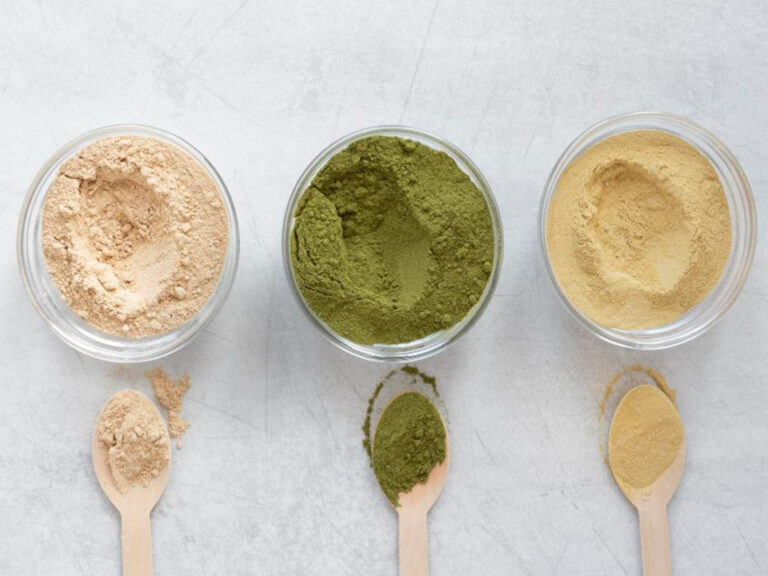
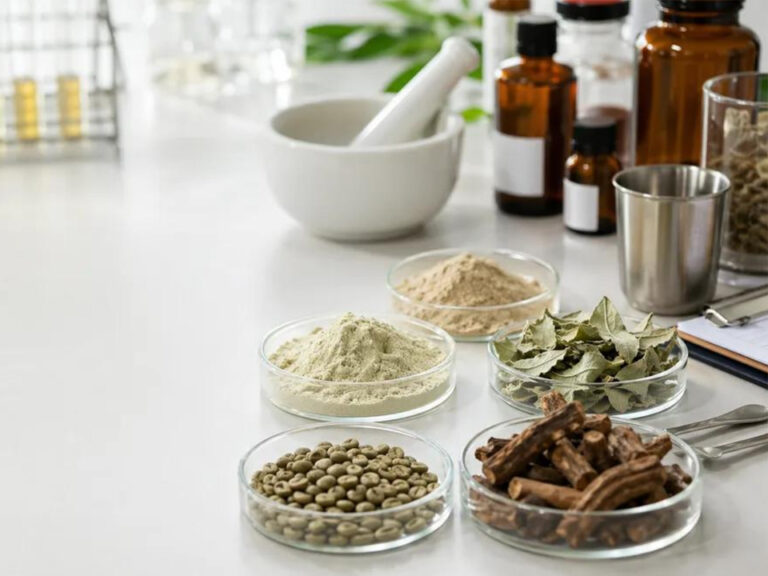
A powder labeled “plant extract” might begin with leaves, roots, bark, fruit, or another botanical part. The plant material is processed so that certain compounds move into an extraction medium, often water or ethanol. After that, the manufacturer may filter, concentrate, and dry the result. Change the solvent or the process conditions, and you may change the extract. Sometimes substantially.
That’s why two suppliers can offer the same botanical name and still send powders that behave quite differently. One may be richer in a particular polyphenol. Another may carry more color, a different odor, or a carrier added during spray drying. Those aren’t minor catalog details. They’re formulation realities.
There are several good reasons to use botanicals: a substantiated skin-conditioning function, a plausible antioxidant research direction, or a particular product concept. A botanical story can be commercially valuable, sure. It just doesn’t take the place of efficacy data.
Botanical Extracts vs. Botanical Powders
A milled botanical powder is generally dried plant matter reduced to smaller particles. An extract, by contrast, reflects the constituents recovered through the selected extraction process. They aren’t equivalent just because both arrive in 25-kg cartons.
The powder might bring more insoluble residue. The extract might offer a more workable marker specification. Or it might not. A cloudy serum, visible sediment, and an unexpected brown cast can all change the choice. I’d be wary of any comparison that says “extract is stronger” without identifying stronger in what, measured by which method.
Start with the application. Then look at the grade.
What Does Scientific Research Say About Botanical Extracts for Skin?
The evidence is promising in places and patchy in others. It’s worth reading the less exciting findings as closely as the favorable ones.
A systematic review and meta-analysis published in the Journal of Cosmetic Dermatology in 2025 pooled eight randomized controlled trials with 396 participants. The researchers reported statistically significant improvements across certain outcomes, including skin hydration, overall elasticity, melanin-related measurements, and erythema. But they did not find a statistically significant reduction in transepidermal water loss (TEWL). Some individual elasticity measures also failed to show a clear benefit.
The safety reporting has a qualifier as well: six trials reported no adverse events, while two didn’t specify whether adverse events occurred. And these trials didn’t test one interchangeable ingredient called “botanical extract.” They studied particular preparations, doses, and finished products. That matters when someone tries to turn the review into a claim for an entirely different raw material.
Laboratory Antioxidant Activity Is Not the Same as Clinical Effectiveness
Picture a fairly ordinary development meeting. An extract’s in-vitro antioxidant number looks impressive, so the team approves a sample for a water-based serum. At accelerated stability, the color shifts and the marker assay drifts. The supplier hasn’t necessarily supplied a bad ingredient. The earlier test answered a much narrower question.
An antioxidant assay tells you how a sample behaves under specified laboratory conditions. It doesn’t tell you about skin penetration, user-visible results, or survival in an emulsion alongside preservatives and other actives. That requires its own work: identity checks, compatible-use-level screening, stability, safety review, and relevant finished-product testing.
Interesting chemistry. Not a consumer claim yet.
Which Botanical Extracts Are Good for Skin?
The answer depends on the brief. A rinse-off wash isn’t a leave-on facial serum. An antioxidant-positioned moisturizer isn’t a clinical pigmentation study. Some botanicals have a long record of topical use. Others are better treated as research candidates, however appealing their phytochemical profiles may look.
Here’s a useful screening comparison—not a ranking of guaranteed skin benefits.
Limited established relevance to conventional topical skincare
Do not infer skin benefits from supplement specifications
These are ingredient-screening considerations, not claims that the listed products are clinically proven or qualified for cosmetic use.
Aloe Vera Extract for Skin Conditioning
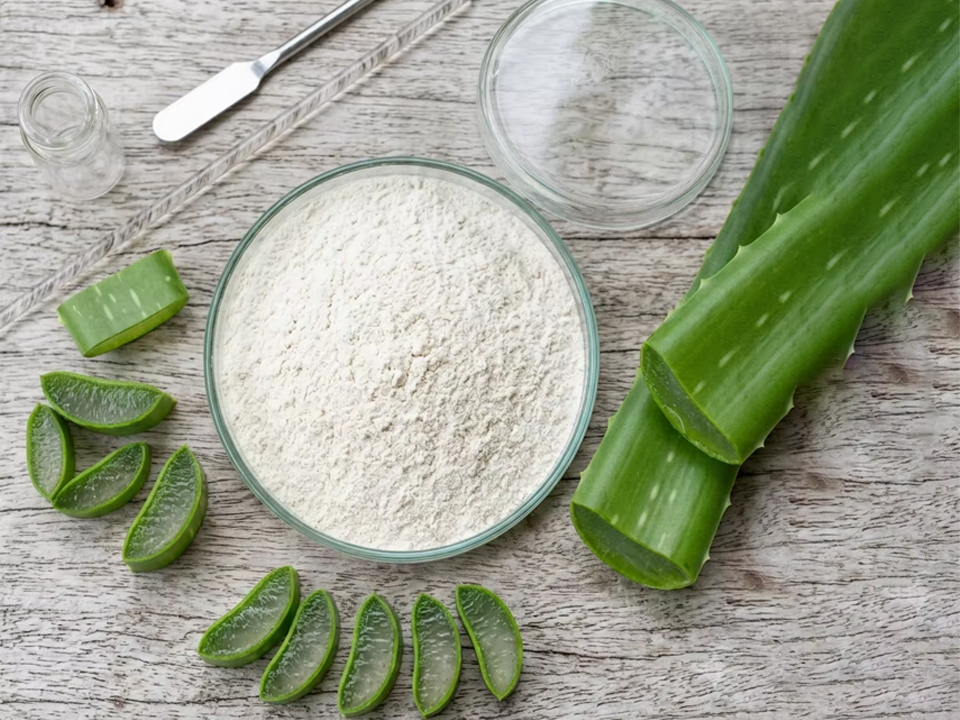
“Aloe vera” sounds specific until the samples arrive. Inner-leaf gel, whole-leaf preparations, and extract powders can be materially different. Plant part, processing, and constituents of concern all belong in the buyer’s first technical questions.
The National Center for Complementary and Integrative Health says topical aloe gel is generally well tolerated, although reports of burning, itching, rash, and eczema exist. It’s a useful reminder that familiar does not mean universally irritation-free.
If you’re comparing aloe vera extract powder in 10:1 and 20:1 grades, ask what went into the extraction, what the final grade contains, and whether suitable cosmetic-use and safety documentation exists. Don’t let “20:1” answer a question it wasn’t designed to answer.
White Tea Extract for Antioxidant Skincare
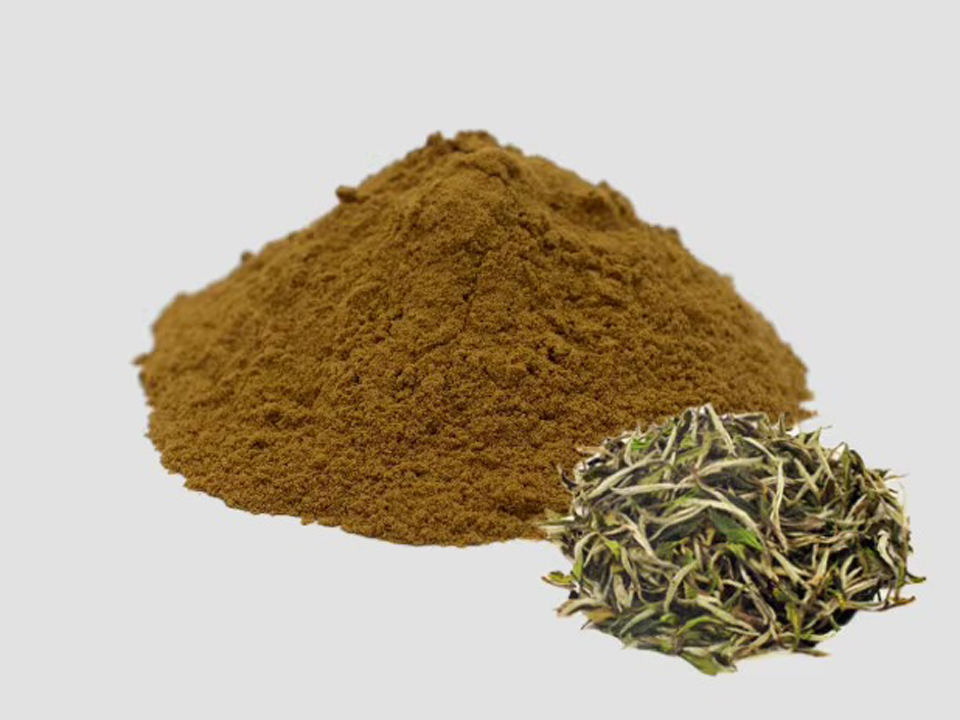
White tea shares the Camellia sinensis species with green tea. The chemistry isn’t necessarily identical, though. Cultivar, processing, extraction, and storage can all move the profile. So a favorable finding from one green-tea preparation shouldn’t quietly become a claim for a white-tea powder.
For antioxidant-oriented development, I’d want to see a credible marker assay, its analytical method, and evidence that the material behaves acceptably inside the actual formula. The available white tea extract powder available in 10:1, 20:1, and 30:1 ratios offers different grades to screen, but an extract ratio is a starting specification, not a polyphenol certificate.
Then comes the less glamorous work: odor, color, oxidation, and assay retention through the intended shelf life. A beautiful initial sample isn’t enough if the finished serum looks different after storage.
Gynostemma Extract as an Exploratory Botanical Ingredient
Gynostemma pentaphyllum (Jiaogulan) contains gypenosides. That’s scientifically interesting. It doesn’t make every gypenoside-containing powder a proven topical active.
Take Gynostemma pentaphyllum extract powder standardized to 98% gypenosides. The specification gives procurement a defined marker target—good for comparing an offered grade and discussing QC. But what happens at the proposed skincare inclusion level? Is it compatible with the base? Is there topical safety information for that grade, rather than evidence borrowed from oral-use research?
Until those questions have answers, “exploratory” is the right word. There’s nothing wrong with R&D. There’s plenty wrong with presenting early-stage curiosity as established efficacy.
Rhodiola Rosea Extract for Botanical Formulation Research
A neat assay percentage can make an ingredient look more claim-ready than it is. Rhodiola offers a good example: salidroside and rosavins are meaningful markers for defining raw materials, yet neither number automatically predicts what happens on facial skin.
The Rhodiola rosea root extract powder range includes grades with different marker specifications. That’s useful for buying and analytical comparison. For a cosmetic project, however, the R&D team still needs grade-specific suitability information, a plausible use level, and appropriate evidence for any proposed on-pack language.
Capsule-grade paperwork isn’t a shortcut through leave-on cosmetic qualification. Different exposure. Different questions.
Kudzu Root Extract and Emerging Botanical Applications
Kudzu is often discussed in connection with plant isoflavones. Fair enough—but a research paper about isolated isoflavones doesn’t automatically validate a commercial kudzu powder, particularly when its constituent profile hasn’t been described.
The sensible starting point for kudzu root extract powder for ingredient sourcing is identity: scientific name, plant part, measured markers, and assay method. After that, assess whether any relevant topical work actually uses a comparable preparation.
No topical data? Keep it on the screening list, not the finished-product claims sheet. That’s a decision, not a failure.
Why Not Every Botanical Extract Belongs in Skincare
Here’s where category confusion gets expensive. A raw material can be standardized, consistently manufactured, and completely unsuitable for the use a brand has in mind.
Consider Garcinia cambogia extract standardized to 50%–60% HCA. That HCA specification describes the offered ingredient, widely positioned for supplement development. It doesn’t establish a cosmetic skin benefit. Putting the powder into a serum doesn’t create the missing clinical evidence.
My view: an ingredient should earn its way into a formula through a relevant function and a supportable safety case. “We already sell it” isn’t one.
How Do Botanical Extracts Work in Skincare Formulations?
The word work hides three different questions: does the chemistry behave in a test tube, does the material behave in the formula, and does the finished product do anything people can notice or measure? A positive answer to one isn’t permission to skip the other two.
Antioxidant Activity and Oxidative Stress
Ultraviolet exposure and other environmental stressors contribute to oxidative processes in skin. Some plant-derived polyphenols show antioxidant activity under defined laboratory conditions. Worth investigating—yes. A guaranteed improvement in someone’s skin—no.
Ask the lab which test was used. Ask formulation R&D what remains after heating, homogenization, light exposure, and the proposed shelf life. Even packaging can influence a sensitive system. And botanical antioxidants must never be presented as substitutes for adequate sunscreen protection.
Skin Hydration and Conditioning
An aloe-focused moisturizer may have a sensible botanical rationale. But the humectants, emollients, occlusives, and emulsion structure do most of the heavy lifting in how the product feels and performs. Read the entire INCI deck, not just the marketing headline.
A low botanical dose in a stable, thoughtfully designed base can be a better commercial choice than a high dose that introduces tack, odor, or instability. More isn’t automatically more. Especially when a supplier hasn’t shown a dose–response relationship.
Soothing and Skin Appearance
Here’s a copywriting trap for product teams: an ingredient shows activity in an inflammation-related lab model, and the packaging brief suddenly says it “treats eczema.” Those are two very different evidentiary and regulatory propositions.
Language about skin comfort or the appearance of redness still requires support, but medical-treatment language can change the product’s regulatory status. Get formulation, claims, and regulatory colleagues into the same conversation early. After artwork approval is a lousy time to discover a problem.
Are Botanical Extracts Better Than Synthetic Skincare Ingredients?
Not necessarily. “Natural versus synthetic” works as a brand argument, but it’s a weak technical specification.
An extract can deliver a complex chemical profile and a distinctive sensory identity. It can also bring greater variation in odor, color, or marker content. A purified or synthetically produced ingredient may be easier to characterize tightly—but doesn’t escape safety assessment, compatibility work, or the need to demonstrate performance.
I’d judge both against the same brief: target function, evidence, toxicological suitability, stability, repeatability, and total formulation cost. Where the ingredient originated is relevant. It just isn’t a verdict.
Why More Concentrated Does Not Always Mean Better
Imagine two supplier quotes for tea extract. Supplier A offers 20:1 with very little supporting chemistry. Supplier B quotes a lower ratio but supplies a defined polyphenol specification and a named analytical method. You can’t select a winner from that alone, yet B has provided something the formulation team can use.
A ratio is normally a declared relationship between starting plant material and extracted material under a stated convention. It is not an assay for a specific catechin. And if a carrier is present, that belongs in the specification too.
Compare the marker result, assay method, stability, practical use level, and cost per kilogram of material that actually meets the brief. A big ratio on the first page of a sales PDF doesn’t pay for a failed batch.
What Formulation Factors Determine Whether Botanical Extracts Perform Well?
It’s possible for a raw material to pass incoming QC and still be a nightmare in production. Bench screening needs to anticipate the actual manufacturing process: shear, heat, hold times, fill conditions, packaging, and shelf life. Not just whether the powder disappears in a beaker.
Solubility and Dispersibility
“Water-soluble.” At what concentration? At room temperature? At pH 5? What happens after 72 hours, or after freeze–thaw cycles? Those are reasonable questions, not picky ones.
Clear serum bases expose haze and precipitate quickly. Emulsions hide some visual problems but introduce their own compatibility risks. Anhydrous systems are another world again. Ask for meaningful data if it exists; then test the grade in the actual prototype.
Stability, Oxidation, and Color
Suppose a pale serum turns amber during accelerated stability. No dramatic separation, no obvious smell—just enough color drift to be visible beside the launch sample. It’s a hypothetical example, but a useful one: aesthetic change may force reformulation even when an analytical specification is still met.
Some botanicals carry natural pigments or oxidation-sensitive constituents. Check color, odor, sediment, pH drift, microbial quality, and marker retention where relevant. Use the intended container-closure system. An airless pump and a clear dropper bottle aren’t interchangeable storage environments.
Don’t discover the packaging problem after labels are printed.
PH and Ingredient Compatibility
The extract doesn’t land in an empty flask. It lands in an existing system of preservatives, chelators, humectants, emulsifiers, and perhaps other actives—any one of which may affect appearance or measured stability.
For an unusual formula, a supplier’s generic compatibility statement is no substitute for actual prototype work. Run the screens. Document the failures as carefully as the successes; the next batch of R&D will thank you.
Dosage and Skin Tolerance
There’s no universal “correct percentage” for botanicals. Two powders bearing the same common plant name may contain different marker levels, carriers, or impurities. Copying a competitor’s advertised inclusion rate, without knowing their grade, isn’t a formulation method.
Start from available toxicological and technical data, decide on a justified screening range, and evaluate the whole finished formula. Higher doses can mean more cost, odor, color, or irritation potential. Sometimes without a measurable upside.
Are Botanical Extracts Safe for Sensitive Skin?
A “plant-based” claim doesn’t mean “hypoallergenic.” It’s a distinction cosmetic brands sometimes blur, even though consumers with sensitive skin have good reason to care about what else came along with the plant compounds.
Risk depends on constituents, concentration, exposure, and formulation. Raw-material origin is only the first chapter.
Potential Risks to Evaluate
During technical screening, look at potential irritants or sensitizers, naturally occurring constituents requiring control, residual solvents, pesticide and heavy-metal limits, microbial specifications, and changes that may develop during storage. Leave-on and rinse-off exposures aren’t the same, either.
There’s a practical troubleshooting issue with long botanical INCI lists: if a finished product starts to discolor or causes a tolerability concern, identifying the cause can become more difficult. A dozen plant names may look attractive on a product page. They also create a dozen more questions when QA opens an investigation.
Why Aloe Vera Requires Particular Attention
Even aloe isn’t one fixed chemical entity. Inner-leaf gel and whole-leaf extracts differ; latex-derived material brings other considerations. So request the plant part and preparation details, along with appropriate information on anthraquinone-related constituents, including aloin where relevant.
“100% natural” is not a test report. Neither is a food-grade COA proof of suitability for a leave-on face product. If the supplier can’t identify the grade precisely, cosmetic qualification should stop there until the gap is addressed.
What Should Manufacturers Know About Botanical Extract Regulations?
One botanical may be marketed for capsules, drinks, and facial creams. The law doesn’t follow the catalog category. It follows the intended product, ingredients, exposure, and claims.
United States Cosmetic Requirements
Most cosmetic ingredients don’t need FDA premarket approval, apart from applicable color additive requirements. That doesn’t remove the manufacturer’s safety and labeling obligations.
Consider how easily copy can drift from “supports a smoother-looking complexion” to “treats eczema.” The U.S. Food and Drug Administration’s guidance on cosmetics labeling claims explains that disease-treatment claims, or certain claims about the body’s structure or function, can place a product under drug regulation.
Have regulatory review the proposed language while it can still be changed—not after the carton is approved.
European Union Cosmetic Requirements
For the EU, Regulation (EC) No 1223/2009 is central to cosmetic product compliance. Article 10 addresses the product safety assessment and cosmetic product safety report; the wider framework includes product information, labeling, and substance restrictions.
Consult Regulation (EC) No 1223/2009 on cosmetic products and the applicable amendments for the intended launch market. An INCI name is not a permit, and inclusion in a database doesn’t mean the proposed finished product has passed a safety assessment.
Raw-material dossiers help. The finished-product responsible parties still have their own obligations.
How Can Buyers Evaluate a Botanical Extract Supplier?
A prompt quotation is nice. So is a clean product photo. But neither answers the question that eventually lands on the QA desk: can the supplier demonstrate that commercial lots are what they claim to be, within specifications the formulation actually needs?
You want an identifiable material, traceable lots, defensible analytical methods, and a supplier who understands what happens when a batch fails its release criteria. That’s a more useful screen than counting certification logos on a homepage.
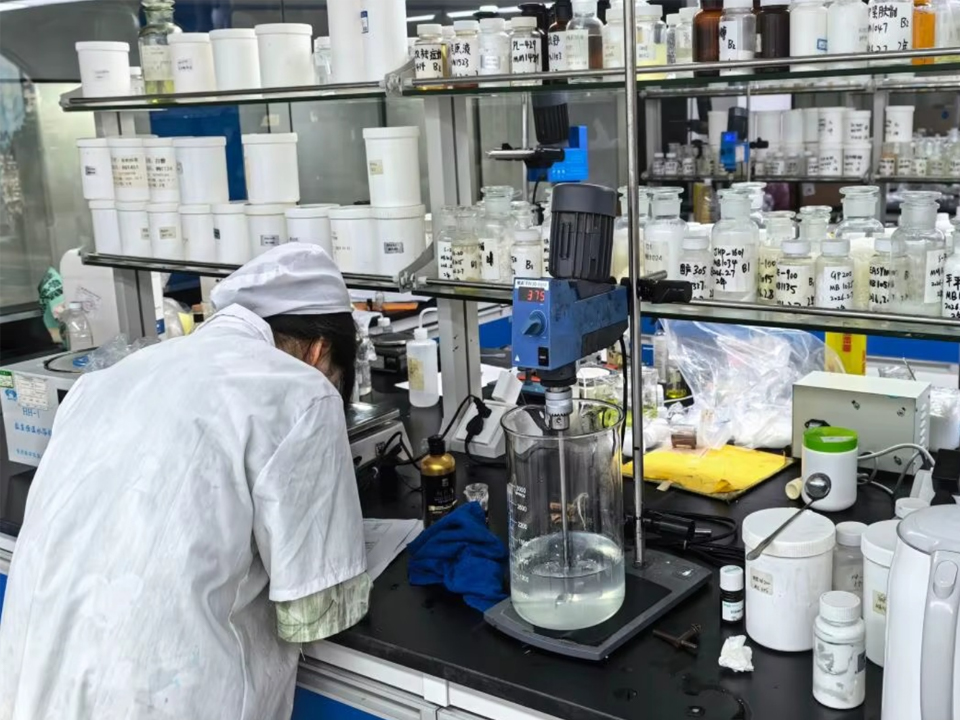
Botanical extract supplier quality control and analytical testing for bulk cosmetic ingredient sourcing
Essential Technical Documentation
Start with the raw-material dossier. If the product is genuinely intended for cosmetic formulation, the documents should let R&D and QA evaluate that specific grade, not botanical extracts as a general category.
Document or information
Why it matters
Technical Data Sheet (TDS)
Identifies material characteristics, specifications, and handling conditions
Certificate of Analysis (COA)
Provides batch-specific analytical results
Botanical identity documentation
Confirms species, plant part, and traceability
Active-marker assay
Helps compare standardized ingredient grades
Residual solvent data
Supports chemical quality and safety evaluation
Heavy metal and pesticide results
Helps assess contaminant risks
Microbiological specifications
Supports raw-material quality review
Safety information
Supports handling and ingredient safety evaluation
Stability information
Helps determine suitable storage and shelf life
Cosmetic applicability information
Helps determine whether the grade has appropriate documentation for the intended use
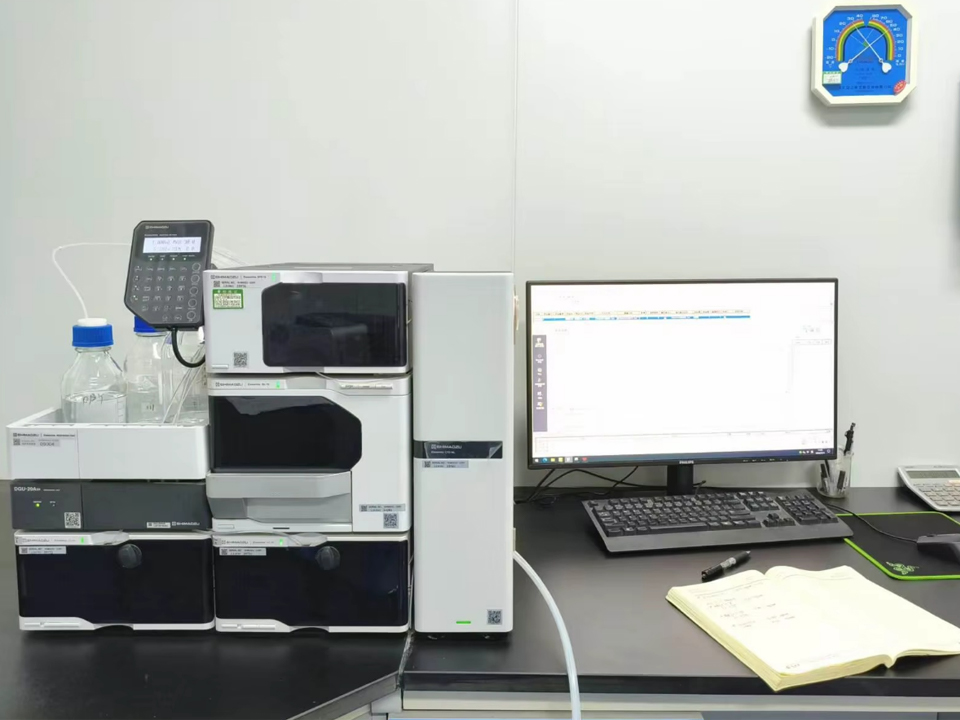
A COA should be tied to an actual batch. An assay should identify the analytical method, particularly when the grade is sold as standardized. If an HPLC chromatogram or identity fingerprint is relevant, ask whether the supplier can provide it. Not every project needs every test—but any waived requirement should be a conscious quality decision.
Evaluate Manufacturing Consistency
A neat pre-shipment sample can flatter a material. The real test is whether the first, fifth, and fiftieth qualified lots behave predictably once production is underway.
Growing region, harvest timing, plant part, carriers, and extraction conditions can all influence variation. Ask about authentication, lot-to-lot marker limits, change control, and how out-of-specification (OOS) results are investigated. If your cream is off-white, a tighter color criterion may matter just as much as a chemical marker.
Keep reference samples if your quality system calls for them. Photographs of one great lot aren’t a supply strategy.
Compare the Cost of Usable Ingredient
Here’s a buying calculation that gets ignored too often. Supplier A wins on dollars per kilogram but creates extra incoming tests and frequent color adjustments. Supplier B charges more but offers a narrower, verified specification. The second quote may cost less once the formulation team prices in rejects and rework.
Compare landed cost, usable inclusion rate, QC burden, minimum order quantity, freight, lead time, and any stability-related scrap. The relevant unit isn’t always a kilogram of powder. Sometimes it’s a finished batch that can be released without a quality hold.
What Should Buyers Specify Before Requesting a Botanical Extract Quote?
“Please quote aloe extract” will get you a price. It may not get you the right raw material. A supplier can’t know whether to recommend a particular powder if the actual project is a clear serum with strict color limits and a demanding leave-on safety brief.
An RFQ is much easier to quote properly when it includes:
Botanical identity: Scientific name and plant part, not only the trade name.
Application: Leave-on skincare, rinse-off cosmetics, or an oral supplement.
Target specification: Ratio, marker compound and assay method when appropriate.
Ingredient format: Powder, liquid, water-soluble grade, or another required form.
Formulation constraints: Expected use level, pH, clarity, appearance, processing temperature, and known incompatibilities.
Documentation: Batch COA, TDS, contaminant limits, safety information, and any application-specific testing.
Destination market: Where the finished product will be sold and how it’s classified.
Commercial scope: Sample amount, MOQ, annual forecast, packing, target lead time, and shipping destination.
And clarify one last point early: are you sourcing a raw botanical ingredient or asking for a turnkey private-label cosmetic? Those are different projects, different responsibilities, and very different quotations.
A better RFQ won’t eliminate all the surprises. It will eliminate a few of the avoidable ones.
Frequently Asked Questions
1. Are botanical extracts actually beneficial for skin?
Some can be, depending on the preparation and formula. Studies of selected topical plant-based products suggest improvements in certain skin measurements, but those results aren’t transferable to every extract bearing the same botanical name. Ask what was tested, and in which product.
2. Which botanical extracts are commonly used in skincare?
Aloe, tea extracts, licorice, centella, and chamomile are familiar options. Familiar isn’t the same as interchangeable. Check the grade’s chemistry, safety dossier, and intended function before choosing it for a new formula.
3. Can botanical extracts help with anti-aging skincare?
Some studied preparations have shown favorable effects on hydration, elasticity, or appearance-related measurements. That’s encouraging, not universal proof of wrinkle reduction. An in-vitro antioxidant result shouldn’t be presented as a human clinical outcome.
4. Are natural botanical extracts safe for sensitive skin?
Not automatically. Plant-derived materials can contain sensitizers or irritants, and tolerability depends on concentration and the whole product. Sensitive-skin claims still need an appropriate safety assessment and, where relevant, finished-formula tolerability testing.
5. What is the difference between a 10:1 extract and a standardized botanical extract?
A 10:1 designation describes a declared plant-input-to-extract relationship. Standardization sets limits for particular marker compounds. They’re different descriptors. Neither alone proves purity, cosmetic compatibility, or a skin benefit.
6. Can food-grade botanical extracts be used in cosmetic formulations?
Sometimes, but not simply because they’re food grade. The buyer must evaluate the exact material for topical exposure, impurities, safety, finished-formula compatibility, and applicable cosmetic regulations.
7. What should skincare manufacturers check before buying botanical extracts in bulk?
Verify identity, batch COA, assay method, contaminant limits, safety information, and lot consistency. Then check the practical details—solubility, stability, MOQ, lead time, and whether the supplier can keep producing the same qualified grade.