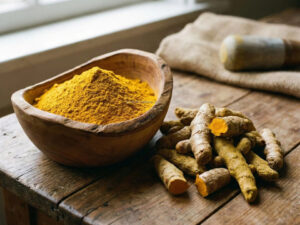
Vegetable Powders for Food, Beverage & Supplement Formulations

Vegetable powders are dried ingredients made from vegetable tissues or juice solids for food, beverage and supplement formulations. Source material, drying method and composition influence flavor, color, texture and handling. Compare bulk ingredient options by their suitability for your production process, then confirm the specifications and documentation needed for your target market.
  • COA Available
  • Technical Documentation
  • Bulk Supply
  • Custom Specifications
USDA
Organic-EU
ISO9001
HALAL
KOF-K Kosher
FSSC
Non-GMO
INGREDIENT OVERVIEW

Vegetable Powder Ingredients for Commercial Formulations

Vegetable powder ingredients are supplied as single-source materials or defined blends for incorporation into manufactured products. Selection begins with the species, plant portion and processing route, because these determine what the ingredient contains and how it behaves during mixing, heating, filling and storage. A category name alone does not establish formulation suitability.
Milled plant tissues and juice-derived solids have different composition profiles. Evaluate their contribution to texture, flavor and the ingredient declaration; ready-to-consume greens blends should not be treated as equivalent raw materials.
SOURCE & INGREDIENT TYPES

Explore Vegetable Powder Types and Ingredient Options

Compare source groups by their intended formulation role. The examples below illustrate ingredient categories; individual product listings establish the current catalog and available grades. These source groups reflect ingredients found in commercial supplier catalogs.
Source Group Category Examples What to Evaluate
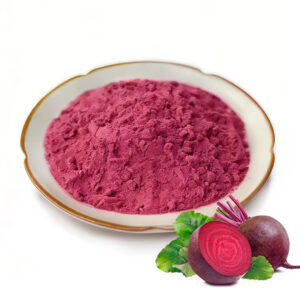
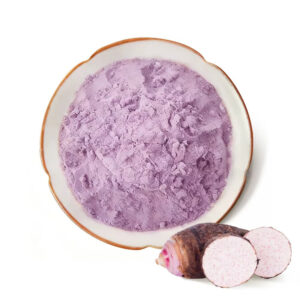
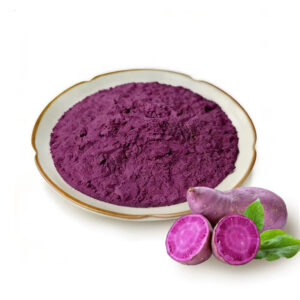
Roots and tubers Beetroot, carrot, sweet potato Color contribution, earthy or sweet notes, and starch content where relevant.
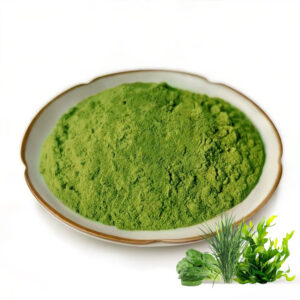
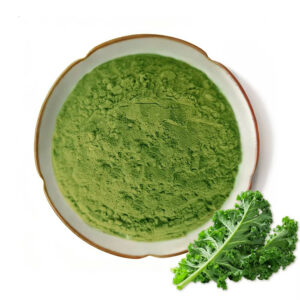
Leafy ingredients Spinach, kale Green color, leafy flavor, insoluble particles and mouthfeel.
Floret ingredients Broccoli, cauliflower Characteristic aroma, taste intensity and compatibility with the recipe.
Culinary ingredients Tomato, pumpkin, celery
Savory or sweet profile, texture contribution and application-specific ingredient declarations.
PROCESSING & COMPOSITION

How Are Vegetable Powders Produced?

Production generally involves drying and milling prepared plant material, or drying a liquid feed such as juice or purée. The drying route and feed composition are separate purchasing decisions.
Processing Method Ingredient Characteristics Formulation Considerations
Conventional dehydration and milling Prepared material is dried, then ground. Check particle size, sensory profile and behavior during rehydration.
Freeze-drying and milling Water is removed from frozen material under vacuum. Compare actual color, flavor, powder handling and packaging requirements.
Spray-drying A liquid feed is atomized and dried. Confirm feed composition, carriers and reconstitution performance.
Whole-material versus juice-derived describes the starting material, not a drying method. Spray-dried grades may contain carriers such as maltodextrin; request the full composition rather than assuming the powder contains only vegetable solids.
TECHNICAL SELECTION

What Specifications Matter When Selecting Vegetable Powders?

The right specifications establish ingredient identity, composition and performance in the intended formula. Acceptance limits should be agreed for the individual grade and destination market.
Specification Area Information to Confirm
Identity and composition Species, plant portion, whole-material or juice basis, carriers and additives.
Particle profile Mesh or particle-size distribution, plus bulk density where filling requires it.
Moisture and water activity Results, test methods and appropriate storage conditions.
Sensory and water interaction Color, aroma, taste, wetting, dispersion and insoluble residue.
Safety criteria Microbiological limits and applicable heavy-metal and pesticide-residue requirements.
Grade and packaging Organic documentation if requested, pack format and moisture protection.
FOOD & BEVERAGE APPLICATIONS

Vegetable Powders for Food and Beverage Applications

Select ingredients by their effect on the finished recipe, not dry-powder appearance alone. The following matrix identifies useful trial questions.
Application Ingredient Considerations Selection Factors
Soups, sauces and seasonings Savory flavor and rehydrated texture. Taste balance, mixing time and cooking conditions.
Bakery and snacks Color, particle texture and interaction with flour. Trial inclusion level, dough behavior and finished-product acceptability.
Prepared foods and dry mixes Uniform distribution and consistent portioning. Particle-size compatibility and segregation during handling.
Beverages and powdered drinks Wetting, mouthfeel and suspended solids. Sedimentation, mixing conditions and performance at the intended pH.
Plant-based foods Flavor contribution and hydrated texture. Compatibility with protein, starch and binding systems.
Research on spinach powder illustrates why bakery trials should evaluate dough behavior and finished-product acceptability at the proposed inclusion level.
SUPPLEMENT FORMULATION

Vegetable Powders for Dietary Supplements and Greens Formulas

In supplement manufacturing, source identity and full composition determine how an ingredient fits the formula and label. Single-source materials and defined blends require separate evaluation; a visually similar green powder may have a different plant source, carrier system or processing history.
Whole-material and juice-derived grades should be compared against the intended dosage form. Do not infer nutrient levels or equivalent vegetable servings from the ingredient name.
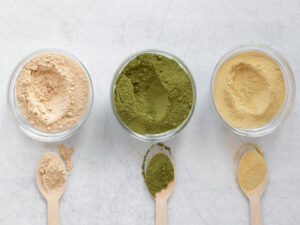
Powdered greens: Assess taste balance, dispersion and blend uniformity.
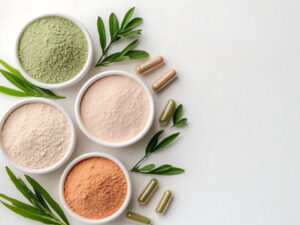
Capsules: Confirm bulk density, flow and achievable fill weight.
Tablets: Evaluate compression behavior and compatibility with excipients.
Multi-ingredient blends: Check composition, allergen declarations and compatibility with the other components.
QUALITY & PROCUREMENT

Quality Documentation and Bulk Vegetable Powder Sourcing

Before ordering bulk vegetable powders, connect the approved ingredient to its producer, specification and batch records. A vegetable powder supplier should clarify whether the selected grade is manufactured internally or sourced from a qualified producer.
Product documents: Current specification, complete composition and relevant declarations.
Batch evidence: Certificate of Analysis, lot identification and applicable testing records.
Traceability: Raw-material origin, production site and supply-chain responsibilities.
Qualification: Sample availability and a procedure for approving the selected grade.
Order conditions: MOQ, packaging, quotation basis, lead time and delivery terms.
Repeat supply: Agreed acceptance criteria and notification of material or process changes.
BUYER QUESTIONS

Frequently Asked Questions About Vegetable Powders

Whole-material powders include the prepared plant tissue; juice-derived ingredients contain dried juice solids, with carriers where used. Compare fiber, insoluble matter and composition rather than substituting grades by name.

Freeze-drying removes water from frozen material under vacuum; conventional dehydration generally uses heat and airflow. Choose by documented sensory performance, handling requirements and cost rather than assuming one method is always better.

Suitability depends on the grade and beverage format. Not every powder dissolves completely; test wetting, sedimentation, taste and color at the intended concentration, temperature and pH.

Request the current specification, batch COA, composition declaration and traceability information. Add microbiological, contaminant, allergen and certification documents according to the ingredient and destination-market requirements.

Verify certification status, the certified operation and the exact ingredient covered by the certification documents. “Natural” wording alone does not establish organic status or exclude carriers. For USDA organic sourcing, verify the certifying agent through the official accreditation resources.

Provide the ingredient name, application, preferred processing route, key specifications, volume and destination. Include packaging needs, requested documents and delivery timing so quotations cover comparable requirements.

START YOUR PROJECT

Discuss Your Vegetable Powder Ingredient Requirements

Tell us which ingredient you need and how it will be used. Include your preferred processing route, whole-material or juice-derived format, particle-size requirements, composition restrictions and any organic-documentation needs. Share the estimated order volume, packaging preference, destination market and required delivery timing. Submit an existing specification or reference sample description when available so the sourcing review can focus on the right material and identify the details that need confirmation before quotation.
Call To Action
PRODUCT DIRECTORY

Explore Our Vegetable Powder Ingredients

Review the listed ingredients and open individual product pages to examine source identity, composition and the information available for your sourcing evaluation.
TECHNICAL RESOURCES

Vegetable Powder Guides & Resources

Explore related sourcing, processing and formulation resources to support ingredient comparison, specification review and preparation of a more complete commercial inquiry.