Share your ingredient, application, or formulation challenge. Our technical team can help with specifications, solubility, delivery systems, and supporting documentation.
Turn Complex Ingredient Questions Into Clear Technical Decisions
Technical & Formulation Team
From specifications and solubility to formulation compatibility and advanced delivery systems, our technical team can help you evaluate the right ingredient approach for your application and target market.
Technical Support for Your Application
Specification & grade selection
Solubility & formulation compatibility
Liposomal, microencapsulated & water-soluble systems
Ask three cosmetic formulators for the “best” natural face powder and you probably won’t get the same answer three times.
There’s a reason.
For an oily-skin setting powder, a buyer may care most about sebum pickup and wear time. A clean-beauty brand developing a translucent loose powder could obsess over white cast instead. A private-label team working on a pressed compact has another headache entirely: pan pickup, pressability, binder compatibility and whether the cake cracks after drop testing.
So the short answer is this: there isn’t one best natural face powder ingredient. The better commercial formulas usually use a powder system—often plant-derived starches plus mineral or sensory modifiers—to balance oil absorption, slip, adhesion, opacity and skin feel.
That sounds less exciting than naming one miracle botanical. It’s also much closer to how a workable formula gets built.
What Does “Best Natural Face Powder” Actually Mean?
“Natural” gets plenty of attention on the front of the package. Inside the formulation lab, though, the conversation gets more specific pretty quickly.
Does it drag?
Does it cake?
Does it flash white under photography?
Can it survive filling without turning the room into a dust cloud?
Those questions matter.
A commercial face powder normally has to balance several things at once:
sebum and moisture absorption;
slip during brush or puff application;
adhesion to skin or foundation;
low chalkiness and limited white cast;
appropriate opacity or translucency;
controlled dust generation;
consistent color;
acceptable odor;
microbiological quality;
ingredient and colorant compliance;
stability during storage;
repeatable raw-material specifications.
And some of those goals fight each other.
Push absorbency too hard and the powder can feel dry. Increase a pale mineral filler and you may get the matte finish you wanted—plus an obvious grey-white veil on medium and deep skin tones. Chase an ultra-fine particle size and application may improve, while airborne dust becomes more difficult to manage.
That’s the real formulation problem.
The question isn’t simply, “Which natural ingredient absorbs the most oil?”
It’s: what gives the required performance without creating a second problem somewhere else?
Which Natural Powder Materials Work Best in Face Powder Formulas?
Natural-positioned face powders commonly combine materials rather than relying on one ingredient.
Excess levels may look pale; grade and particle size matter
Translucent loose powders and light mattifying formulas
Tapioca or arrowroot starch
Absorbency and soft-touch base
Plant-derived positioning and lightweight sensory profile
Limited adhesion when used alone; excessive levels may look powdery
Talc-free loose powder concepts
Kaolin
Absorbent mineral filler
Stronger mattifying effect and useful opacity
Can increase drag, dryness and white cast; particle exposure requires attention
Oily-skin and high-matte formulas
Mica or sericite-type mineral fillers
Slip, spread and optical appearance
Improves application and can reduce a flat, chalky feel
Different grades vary significantly in sheen, particle size and coverage
Natural-finish and pressed powders
Botanical plant powders
Accent ingredient, botanical identity or visual character
Strong ingredient story and distinctive natural color
Color and odor variation, microbial control, staining and regulatory questions
Low-level accent use after cosmetic suitability is established
There’s a temptation here—especially during early sourcing—to pick the ingredient with the strongest individual selling point. Highest oil absorption. Most natural. Cleanest label. Most interesting botanical story.
I’d resist that.
A starch-heavy prototype may soak up sebum nicely and still feel cheap because it has poor payoff and almost no elegance on application. A kaolin-heavy blend might stay matte for longer but make the wearer look as though someone dusted flour over the foundation.
Then there’s the opposite problem: gorgeous slip, poor control.
That’s why the raw-material shortlist should be built around roles in the formula, not around which ingredient sounds strongest on a marketing sheet.
Rice, Tapioca or Arrowroot: Which Is the Better Natural Base?
Rice powder gets talked about a lot in natural makeup. Fair enough. But “rice powder” is still far too vague for a purchasing specification.
What grade?
What PSD?
What moisture?
What bulk density?
Those questions can turn two apparently identical quotes into two very different materials.
Rice-derived powders can work nicely when the brief calls for a light, absorbent base with a relatively soft sensory profile. Tapioca and arrowroot-type starches sit in similar territory and are common starting points for talc-free or plant-forward concepts.
Yet the botanical name alone tells you surprisingly little about how the powder will behave once it hits a ribbon blender—or someone’s face.
Two materials sold under broadly similar names may differ in:
mean particle size and particle-size distribution;
moisture;
bulk density;
oil absorption;
flow;
color;
odor;
microbial count;
processing method;
surface treatment;
tendency to agglomerate.
This is where procurement sometimes gets tripped up.
A purchasing team asks for “rice powder,” receives three quotes, and compares price per kilogram. R&D receives the cheapest sample and discovers that it drags badly, clumps, or looks noticeably pale on skin.
Cheap quote. Expensive detour.
So for a commercial project, request the specification sheet and COA first, then get a representative sample and test it in the intended base formula. The same discipline applies when sourcing from a broader botanical ingredient portfolio. Identity tells you what the material is. It doesn’t tell you whether it will behave the way your formulation needs it to.
When Does Kaolin Make Sense?
Kaolin earns its place when the brief needs stronger mattifying performance.
But more kaolin isn’t automatically better. Not even close.
The Cosmetic Ingredient Review’s amended assessment identifies naturally sourced clays as cosmetic absorbents and bulking materials and concluded that kaolin is safe in the practices of use and concentrations covered by its assessment. The same review also highlights inhalation-data limitations for several other naturally sourced clays in products that may be incidentally inhaled.
For loose powder, that last point deserves attention. Dust isn’t just an annoying production-floor issue.
A clay-rich powder can create another problem before you even get to inhalation considerations: appearance.
A procurement discussion I found in the DIY formulation community captures the issue rather well. Someone working on an oil-controlling setting powder described repeated harsh white cast and suspected kaolin; once percentages entered the conversation, the problem stopped being “how do I get more oil control?” and became “how do I get oil control without wrecking the finish?”
That Reddit thread isn’t a controlled formulation study. It shouldn’t be treated like one.
Still, the failure mode is familiar and useful: a technically absorbent powder can be cosmetically bad.
If kaolin is being evaluated, compare percentage, particle characteristics, spread, drag and visual payoff together. Looking at absorbency alone is a trap.
A Botanical Powder Is Not Automatically a Cosmetic Face Powder
Here’s where ingredient terminology gets messy.
A buyer searches “natural powder,” finds a plant powder with a nice color and clean ingredient declaration, then assumes it belongs in cosmetics because it’s botanical.
That jump is too big.
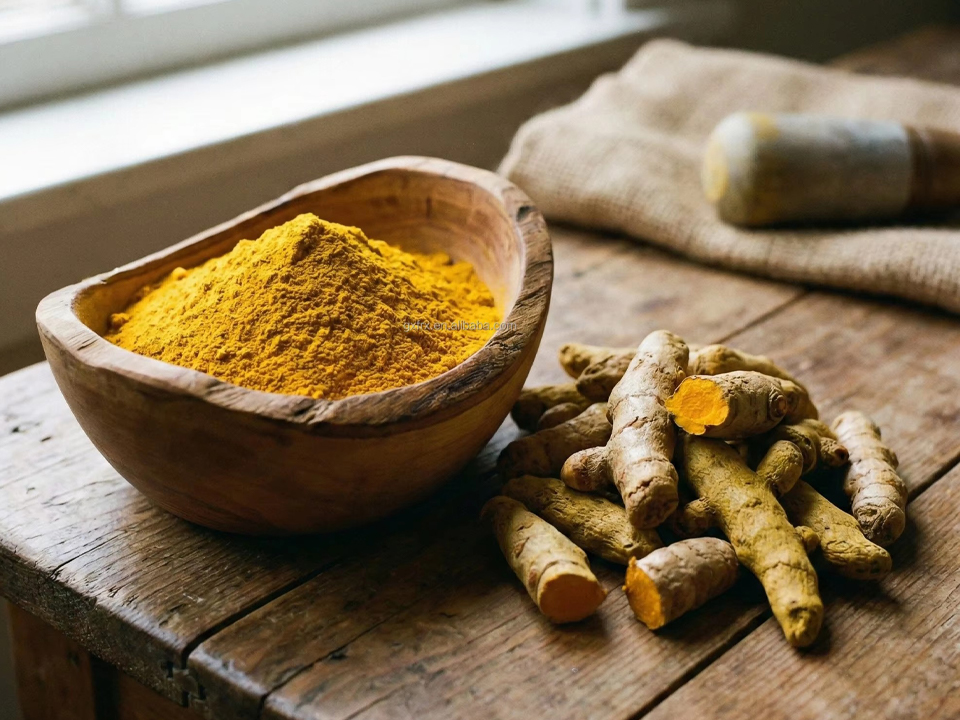
The site’s whole-plant botanical powders are currently positioned primarily for supplement, food and beverage formulation. They’re dried and milled botanical materials. That tells us something about identity and intended commercial positioning—but it does not automatically qualify every powder in that category for leave-on facial use.
Automatically ready for a loose-setting-powder formula? No.
Strongly colored whole botanicals bring a messy little collection of questions with them: staining, odor, batch-to-batch color drift, particle consistency, microbial limits and—depending on why the material is being added—regulatory treatment of color.
Other botanical powders make the distinction even clearer.
Fenugreek seed powder is currently positioned for supplement formats such as capsules, tablets and powder blends. Psyllium husk powder is likewise positioned for supplement and food applications.
Neither fact means those materials are “bad.”
It simply means application suitability hasn’t magically transferred from one industry to another.
For a cosmetic project, R&D and QA still need answers around the appropriate specification, intended function, microbiological limits, contaminants, PSD, toxicological suitability and target-market regulatory status.
“It’s edible” isn’t that specification.
Neither is “it’s natural.”
Does “Natural” Mean Safer?
No.
And this is one of those claims that cosmetic brands need to handle carefully because consumers often hear “natural” and mentally translate it into “gentler” or “safer.”
Regulators don’t make that shortcut.
The U.S. FDA states that it has not established a regulatory definition of “natural” for cosmetic labeling, and natural-source cosmetics are subject to the same safety and labeling requirements as other cosmetics.
That changes how an RFQ should be written.
If the buying requirement says only “100% natural powder,” the supplier still doesn’t know the actual technical target.
A naturally derived material can still bring:
undesirable microorganisms;
allergens or irritants;
naturally occurring contaminants;
undesirable color or odor variation;
particle-size issues;
incompatible physical properties;
regulatory limitations for a particular cosmetic use.
So I’d put performance and specification before the badge.
A stronger purchasing brief might specify natural-origin expectations plus PSD, microbial limits, appearance, odor, contaminants, processing method and the intended function in the final cosmetic.
Much less romantic.
Much more useful.
Be Careful When Botanical Powders Are Intended to Add Color
Suppose the product developer loves that natural blue from butterfly pea.
That’s when the intended function question matters.
If a material is being included because it changes the color of the finished cosmetic, the regulatory analysis can be different from simply adding a botanical ingredient at a low level for another function.
FDA guidance specifically tells cosmetic manufacturers to verify that color additives are approved for their intended use and meet applicable restrictions and certification requirements.
So don’t reason backward from food use.
“It’s used in drinks” doesn’t establish that the same plant material can be used as a cosmetic color additive in the United States. And “natural pigment” isn’t a regulatory category that lets a developer skip the intended-use review.
This can become painful late in a project.
Imagine the formula works, the brand team loves the shade, pilot samples are approved—and only then somebody asks whether the coloring approach is permissible in the launch market.
Wrong order.
Check that question before locking the formula.
Particle Size Can Matter More Than the Ingredient Story
Beautiful origin story. Great botanical. Nice COA.
The powder still feels gritty.
Now what?
Particle size is one of the least glamorous specifications in a marketing meeting and one of the most useful in a powder-development meeting.
Too coarse
Application can feel scratchy or uneven. Visible particles may show up on skin, particularly if the botanical has its own color.
Too fine
Now you may have a dusting problem. Filling can become messier, airborne powder can increase and flow behavior can change considerably.
Broad particle-size distribution
Consistency becomes harder to control. You can see changes in flow, blending and skin feel even when the basic ingredient identity remains unchanged.
This is why “fine powder” on a quotation isn’t enough.
Ask how the supplier measures it.
Depending on the material and process, that could mean mesh/sieve data, laser-diffraction PSD data, D10/D50/D90 values or another validated internal method.
A supplier quoting 80 mesh and one quoting a defined micron distribution may technically both be offering “fine powder,” yet they haven’t actually given you equivalent information.
For procurement, that’s a red flag worth clearing up before price comparison.
Microbiological Quality Deserves More Attention With Plant Powders
Dry looks safe.
It isn’t the same thing as microbiologically controlled.
FDA identifies contaminated raw materials as one route through which microorganisms can enter cosmetics and states that companies are responsible for ensuring cosmetic products are not harmful because of microbial contamination.
With minimally processed botanical materials, that matters.
Whole-plant powders can carry very different processing histories. Maybe the material was milled. Maybe heat treated. Maybe another decontamination step was used. Maybe not.
The buyer needs to know.
Depending on the ingredient and target market, QC review may cover:
total aerobic microbial count;
yeast and mold;
specified objectionable organisms;
moisture or water activity where relevant;
processing or decontamination method;
lot-specific COA;
retest or shelf-life information.
And here’s another purchasing shortcut I’d avoid: food grade = cosmetic grade.
Those aren’t interchangeable claims.
A food specification may contain plenty of useful analytical information. Good. Use it. But cosmetic developers still need an application-specific safety assessment, finished-product evaluation and whatever additional documentation the target market and quality system require.
Match the Powder System to Skin Type and Finish
One powder system for everybody sounds efficient.
Until the wear test.
Oily skin and high-matte finish
Absorbency needs more weight in the formulation brief, but the team still has to watch drag and white cast. A starch-plus-absorbent system will often give the formulator more room to tune performance than simply loading up on clay.
Normal or combination skin
Moderation usually wins here. Enough oil control to keep the T-zone from becoming shiny, but enough slip that the face doesn’t look flat and over-powdered after application.
Dry or mature skin
This is where aggressive mattifying systems can expose every texture problem the formula was supposed to hide.
Low drag matters. So does avoiding a dusty finish.
Deeper skin tones
“Translucent” is a product claim, not a laboratory result.
Test it.
Pale absorbent powders may disappear beautifully on one complexion and become obvious on another. Real shade-range testing beats assumptions every time.
Pressed powder
Different game.
Now you’re looking at compaction behavior, binder response, cake strength, pickup, glazing and whether the pressed mass survives handling.
Loose powder
Flow and dust move higher up the priority list. Sifter geometry also starts affecting the user experience—sometimes more than a minor change in raw-material cost.
Same category.
Very different technical brief.
What Should a Procurement Team Test in Supplier Samples?
A bag sample sitting under office lighting won’t tell you much.
Put it into the formula.
Better yet, run controlled side-by-side batches where the candidate powder is the only meaningful variable. That’s where differences start showing up.
Application: Try the intended brush, puff or sponge. A powder that feels acceptable between two fingers can behave quite differently when applied over foundation.
Slip: Watch for drag. Powders that “grab” the skin often need balancing.
Oil control: Don’t stop at immediate mattification. Compare wear over time, and check whether improved sebum control comes with tightness or cakiness.
White cast: Test more than one skin tone. Different lighting too.
Flash photography: Yes, still worth doing. A formula can look perfectly acceptable in normal room light and suddenly turn pale in a flash photo.
Color drift: Botanical materials deserve extra attention here. Natural raw-material color can shift by harvest, processing, storage conditions or lot.
Odor: Smell the finished prototype, not just the raw powder. A botanical note that’s barely noticeable at 0.2% can become a completely different issue at several percent.
Flow and dust: Pay attention during filling. Does it bridge? Puff? Cling? Does a cloud come off the hopper whenever the operator moves material?
Batch consistency: One golden sample proves very little. For commercially important naturally variable materials, reviewing more than one production lot can save trouble later.
And don’t automatically award the business to the lowest $/kg.
That saving looks much less clever when QC rejects a shipment, a powder requires extra processing, or the finished product needs reformulation because the substitute grade changed skin feel.
Unit price is visible.
Failure cost usually isn’t—until it arrives.
What Should Buyers Specify Before Requesting a Quote?
“Please quote natural face powder ingredient” isn’t really an RFQ.
It’s an invitation to receive incomparable offers.
Give the supplier enough information to identify the actual grade you need:
ingredient identity and preferred INCI name;
intended cosmetic function — absorbent, filler, botanical accent, texture modifier or another defined role;
loose or pressed powder format;
target finish — matte, natural, soft-focus or luminous;
target skin type and shade range;
natural-origin or certification requirements, if applicable;
particle-size requirement or preferred distribution;
color and odor limits;
microbiological specification;
heavy-metal or contaminant requirements where relevant;
moisture specification;
required COA, TDS and safety documentation;
target markets, such as the United States or European Union;
sample quantity;
commercial order quantity and expected annual volume;
packaging requirements;
required delivery schedule.
Colored botanical materials need one more line in the discussion: tell the supplier what you’re actually trying to do with the color.
Don’t bury that.
If the material is being considered partly or primarily to color the cosmetic, regulatory reviewers need to know. A supplier can’t meaningfully support the project if the intended function stays vague.
The same goes for annual volume. A 2 kg laboratory request and a 10-ton annual program aren’t the same sourcing conversation, even when the powder name is identical.
A useful supplier should be able to move beyond “yes, we have it” and discuss grade, specification, documentation and consistency.
That’s the difference between having a powder and having a raw material that R&D can actually qualify.
Frequently Asked Questions
What is the best natural powder for an oily face?
For an oily-skin formula, I’d look at the powder system, not hunt for one “best” ingredient. Rice- or tapioca-based materials can form a light absorbent base; kaolin can push the finish further toward matte.
But there’s a limit. Add too much absorbent clay and the payoff can turn dry, chalky, or noticeably pale on skin.
Is rice powder good for natural face powder formulations?
Yes—provided you’re buying the right grade.
“Rice powder” on a supplier quotation doesn’t tell R&D nearly enough. Particle size, flow, moisture, microbial specification and even color can vary from one grade to another. For a loose setting powder, I’d want a sample in the actual base formula before approving it.
Is kaolin better than arrowroot powder for face powder?
They aren’t really substitutes.
Kaolin is a mineral absorbent and can give a stronger matte effect. Arrowroot-type starch is usually lighter in feel and fits naturally into plant-forward or talc-free concepts.
In many formulas, using some of each makes more sense than forcing one raw material to handle the whole job.
Can matcha or turmeric powder be added to natural makeup?
Technically, the first question isn’t “Can we mix it in?” It’s “Is this particular grade suitable for the intended cosmetic use?”
Matcha, turmeric and other whole botanical powders may bring strong color, plant odor, microbial variation and staining. If color is part of the reason for adding them, there’s also a regulatory question to clear before launch.
Does food grade mean a botanical powder is cosmetic grade?
No—the two labels answer different questions.
A food-grade COA can still be useful, especially for identity, microbiology or contaminants. But facial application introduces another exposure route and a different product brief. Cosmetic suitability has to be assessed separately rather than inferred from food use.
What should I ask a natural powder supplier before ordering samples?
Don’t stop at price, mesh size and MOQ.
Ask for the INCI or material identity, particle-size data, moisture, microbial limits, appearance, processing method, COA, TDS and relevant contaminant information. Then tell the supplier whether you’re making a loose powder, pressed compact or another format. That context matters.
Is a 100% botanical face powder better than a blended formula?
Not by default.
A single botanical sounds attractive on a label, but makeup still has to spread well, control shine, adhere to skin and look good after application. A carefully balanced blend may do those jobs far better than one plant powder used simply to keep the ingredient list short.